
The legend of Edgar Davids

Legends
🏆 Edgar Davids and the Art of Controlled Ferocity!
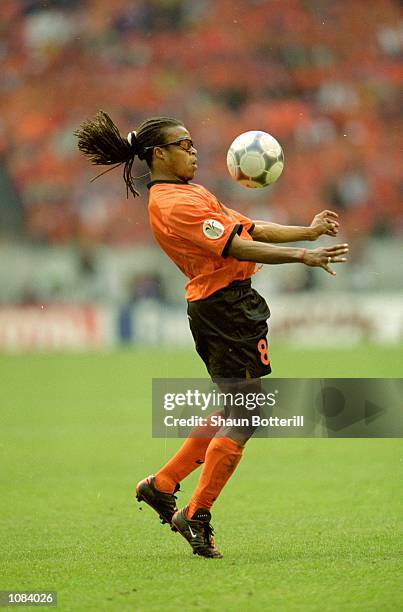
There have been many midfielders in the history of football who could tackle. There have been many who could pass. There have been a handful who could do both to an elite level simultaneously. But there has only ever been one Edgar Davids — and that is because what Davids brought to a football pitch was not simply a set of technical qualities. It was a force of nature. An energy. A will that made him one of the most distinctive, most exciting and most influential players of his generation.
He called himself the Pitbull. His coaches called him indispensable. His opponents called him the hardest man they ever faced. And those who watched him week after week — at Ajax, at Juventus, at AC Milan, at Barcelona, at Internazionale and at the Dutch national team — simply called him one of the best.
Origins: Suriname, Amsterdam and the Ajax Machine
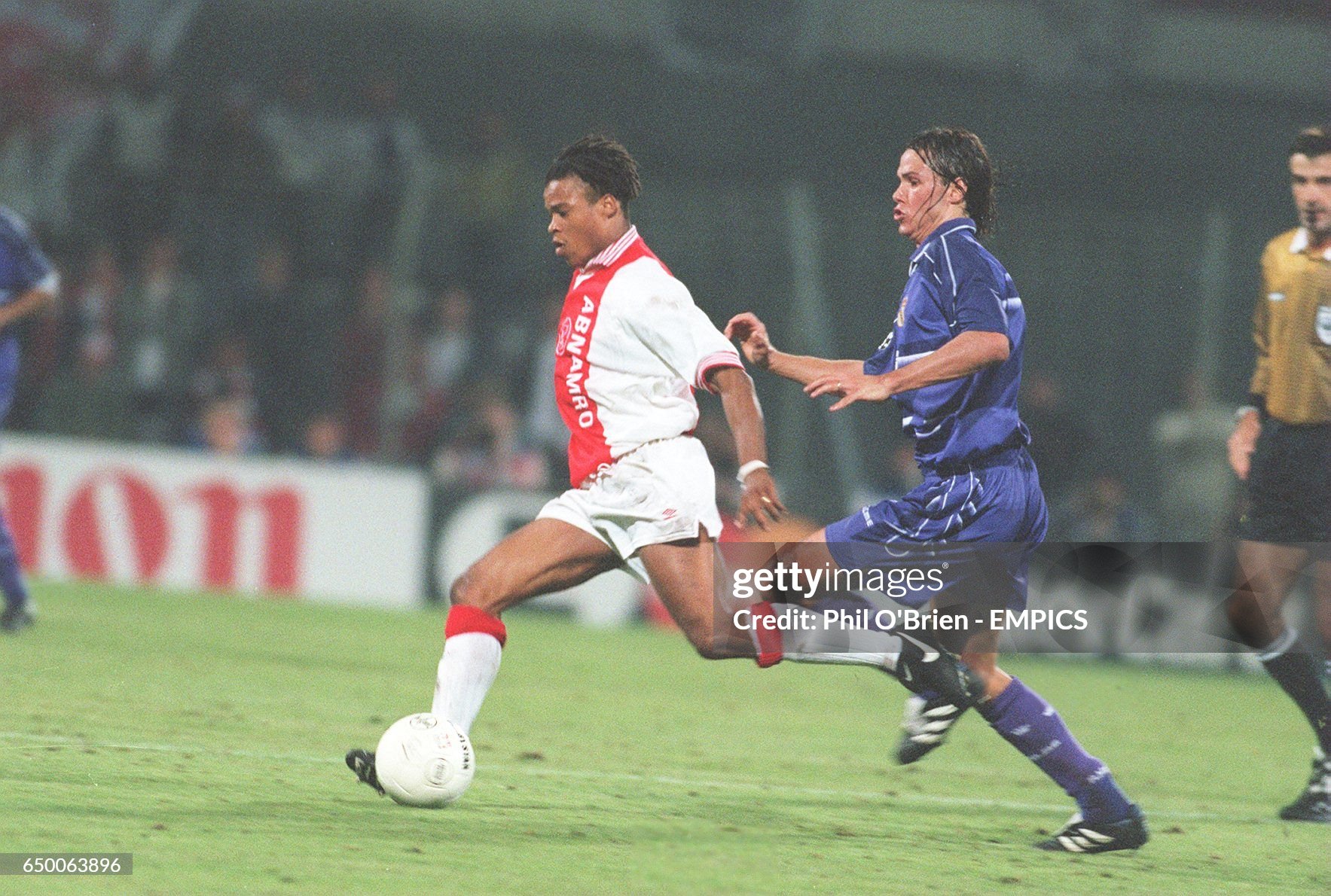
Edgar Steven Davids was born on the 13th of March 1973 in Paramaribo, Suriname — the small South American country that has produced a disproportionate number of Dutch football legends, among them Frank Rijkaard, Clarence Seedorf, Patrick Kluivert and Davids himself. His family moved to the Netherlands when he was young, and it was in Amsterdam that his football education began in earnest — at the academy of Ajax, the club that has consistently produced some of the finest midfielders in the history of the European game.
At Ajax, Davids developed under a philosophy that demanded technical quality above all else. The club's famous 4-3-3 system, built on pressing, positional intelligence and collective movement, shaped him into something rare: a defensive midfielder who could do everything. He could bite into tackles with a ferocity that left opponents wincing. He could receive the ball under pressure, turn, and distribute with the composure of a player twice his size. He could drive forward, arriving into attacking areas with a timing and power that defensive midfielders of his era simply did not possess.
The Ajax Years and the First Peak
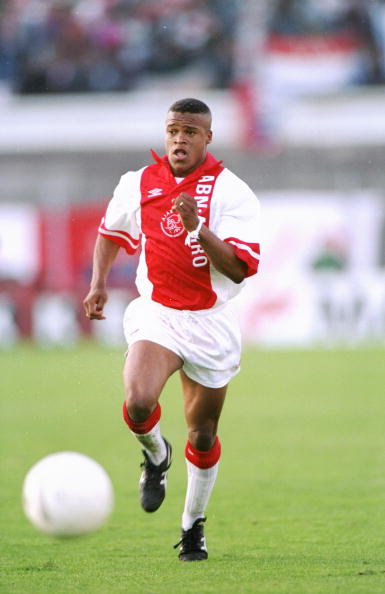
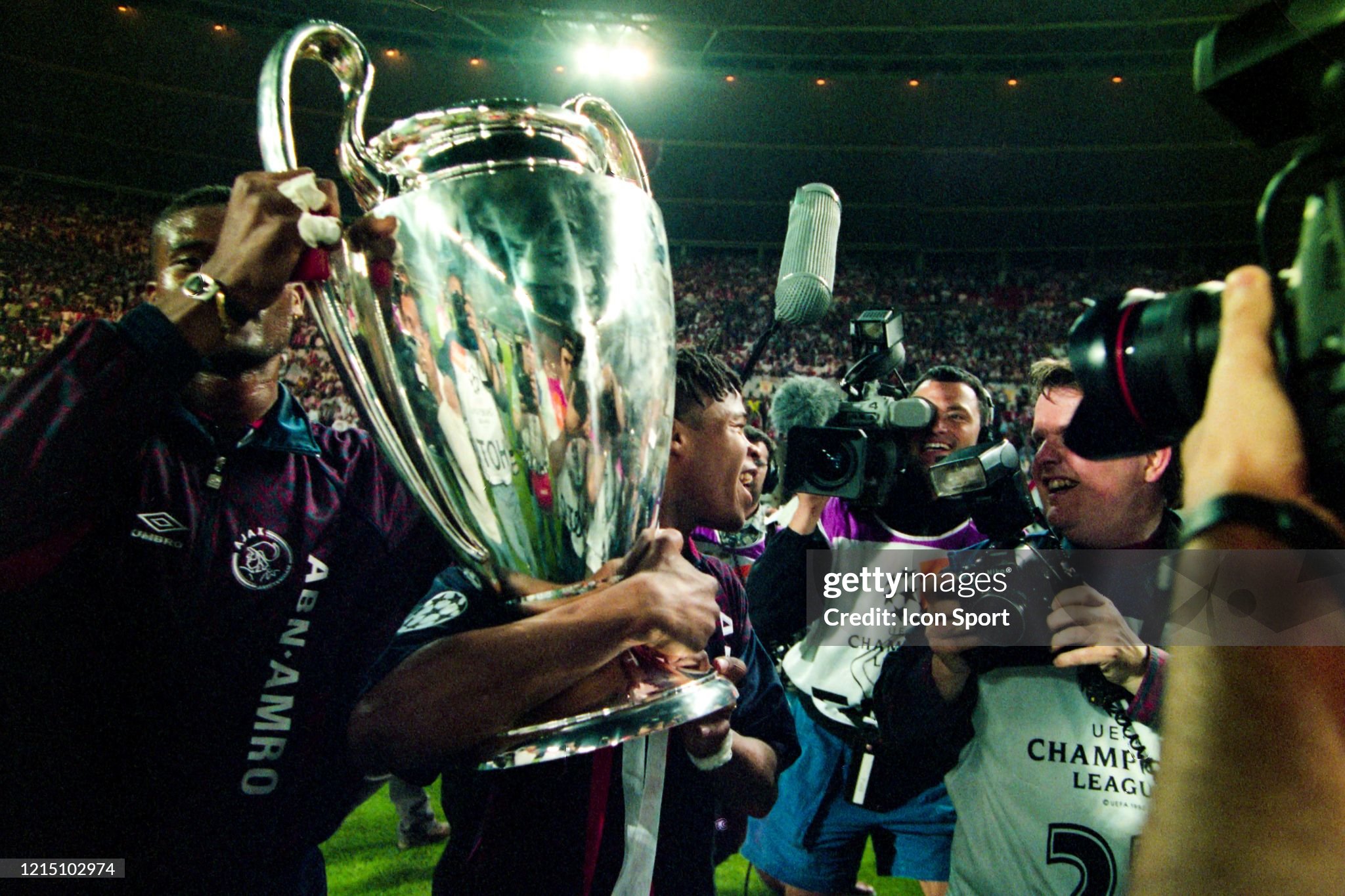
Davids made his senior debut for Ajax in 1991 and quickly established himself as a central figure in one of the most celebrated club sides the Netherlands has ever produced. The Ajax of the mid-1990s — coached by Louis van Gaal and featuring a generation of extraordinary talent including Seedorf, Kluivert, Marc Overmars, Frank de Boer and Edwin van der Sar — won the UEFA Champions League in 1995, defeating AC Milan 1-0 in the final in Vienna. Davids was at the heart of it — pressing, intercepting, driving, demanding more from every player around him.
He won three consecutive Eredivisie titles with Ajax between 1994 and 1996, added the Champions League and the UEFA Super Cup, and established himself as one of the most complete midfielders in Europe. But even within a squad of extraordinary talent, the relationship was not always smooth. His intensity — on the pitch and off it — created friction, and in 1996 he was sold to AC Milan.
Juventus: Where the Legend Was Forged
The stint at Milan was brief, and it was at Juventus — where he arrived in 1996 — that Davids truly became a legend. Under Marcello Lippi, he was the engine of one of the most powerful club sides in European football at the turn of the millennium. With Zinedine Zidane as the creative genius ahead of him and Alessandro Del Piero as the attacking outlet, Davids provided the fuel — pressing opponents into mistakes, winning the ball back in impossible situations, and distributing it with a simplicity and efficiency that disguised just how technically demanding his role actually was.
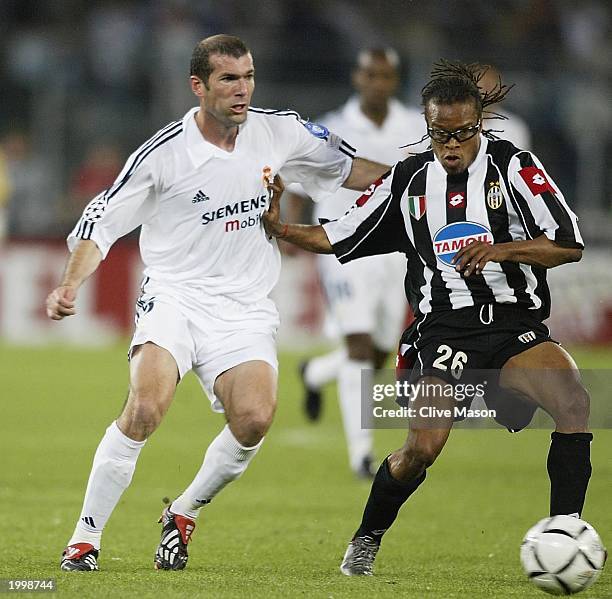
He won two Serie A titles at Juventus (1997-98 and 2002-03) and reached two Champions League finals — losing both, against Real Madrid in 1998 and AC Milan in 2003. He was named in the UEFA Champions League Squad of the Season in 1997-98 and won the Serie A Player of the Year award in 1998. His performances earned him a place in the FIFA World XI and the UEFA Team of the Year. He was, during those years, the argument for the defensive midfielder as the most important player on a football pitch.
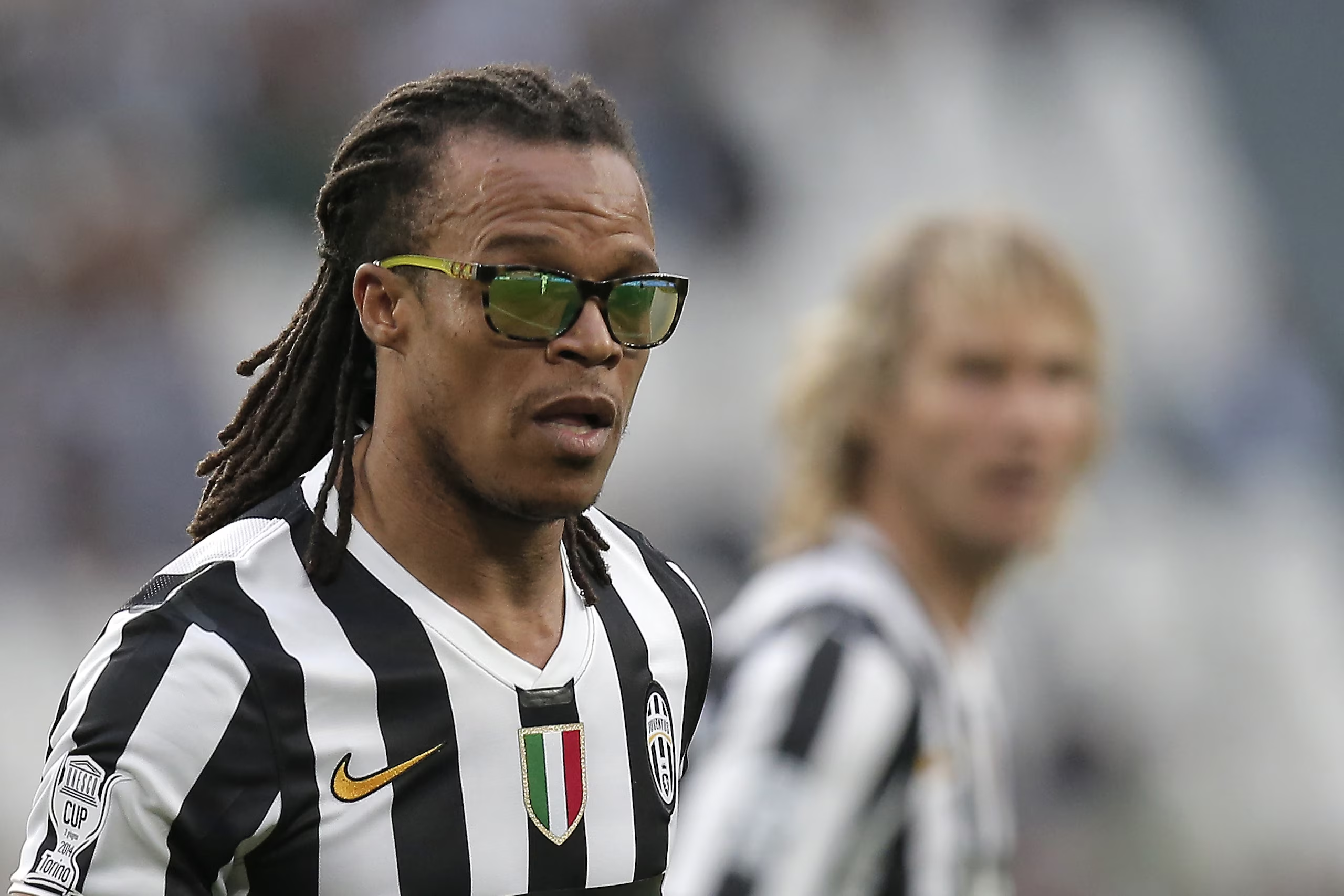
It was also at Juventus that the glasses appeared. In 2000, Davids was diagnosed with glaucoma — a condition affecting his vision — and was prescribed specialist protective goggles to wear during matches. What could have been a debilitating development became instead one of football's most iconic images: the dreadlocks, the goggles, the relentless intensity. Edgar Davids, already recognisable for his playing style, became one of the most visually distinctive figures in the history of the sport.
International Football: The Lion of Surinamese-Dutch Heritage
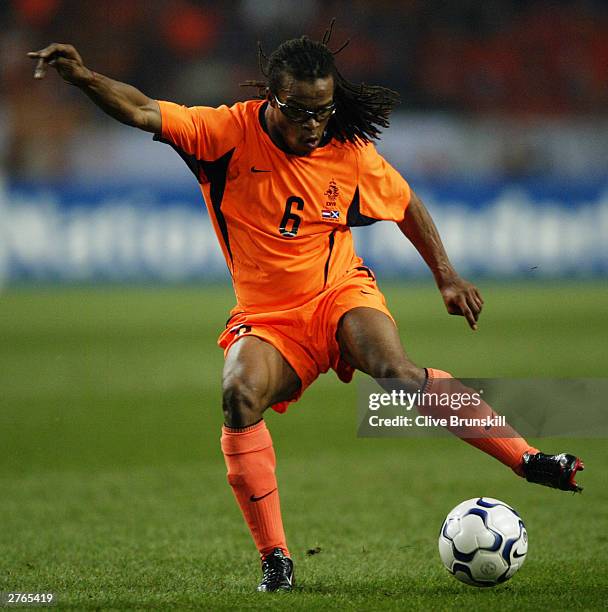
Davids earned 74 caps for the Netherlands between 1994 and 2005, representing his country at three FIFA World Cups (1994, 1998 and 2006) and two UEFA European Championships (2000 and 2004). His finest international moment came at Euro 2000 — hosted jointly by Belgium and the Netherlands — where the Dutch reached the semi-finals before losing to Italy on penalties. Davids was one of the tournament's outstanding performers, his midfield energy central to the Netherlands' flowing, attacking play.
His international career was not without controversy. He was sent home from the 1996 European Championship after publicly criticising national team coach Guus Hiddink — a gesture of defiance that illustrated the complexity of his character. Davids was never simply a footballer. He was a man with strong views, a strong identity and a strong sense of his own worth. He apologised, returned to the national fold, and went on to serve his country with distinction for another decade.
He was also, in 2001, banned from football for five months after testing positive for the synthetic testosterone nandrolone — a suspension that cost him a significant portion of one of the best periods of his career. Davids always maintained that the substance had entered his system through a prescribed medication for his glaucoma condition. The suspension remains a complicated chapter in an otherwise extraordinary story.
Barcelona, Inter and the Final Chapter
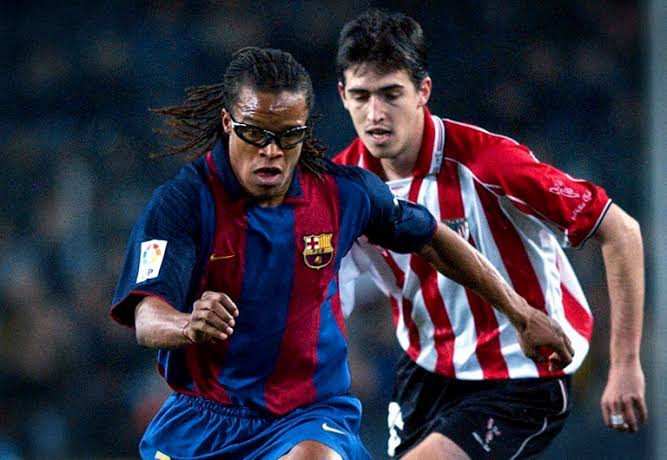
After his time at Juventus, Davids spent loan spells at Barcelona and Internazionale — two of the world's biggest clubs — before returning to Ajax and then departing for Tottenham Hotspur in 2005. At Spurs, under Martin Jol, the Pitbull continued to impress in the Premier League, his quality undimmed by age or miles. He later had spells at Barnet — where he briefly served as player-manager — and Crystal Palace before retiring from professional football.
At Barnet, in the fifth tier of English football, he was extraordinary. A man who had played Champions League finals and world-class football at the highest level chose to end his career at a non-league club — not out of desperation, but out of love for the game itself. He played. He coached. He pressed. He was still, even there, the hardest-working player on the pitch.
The Legacy
What separates Edgar Davids from other great defensive midfielders of his era is the totality of what he represented. He was technically brilliant but also physically dominant. He was combative but also intelligent. He was deeply individual — in his appearance, his personality, his style — but played always in service of the collective.
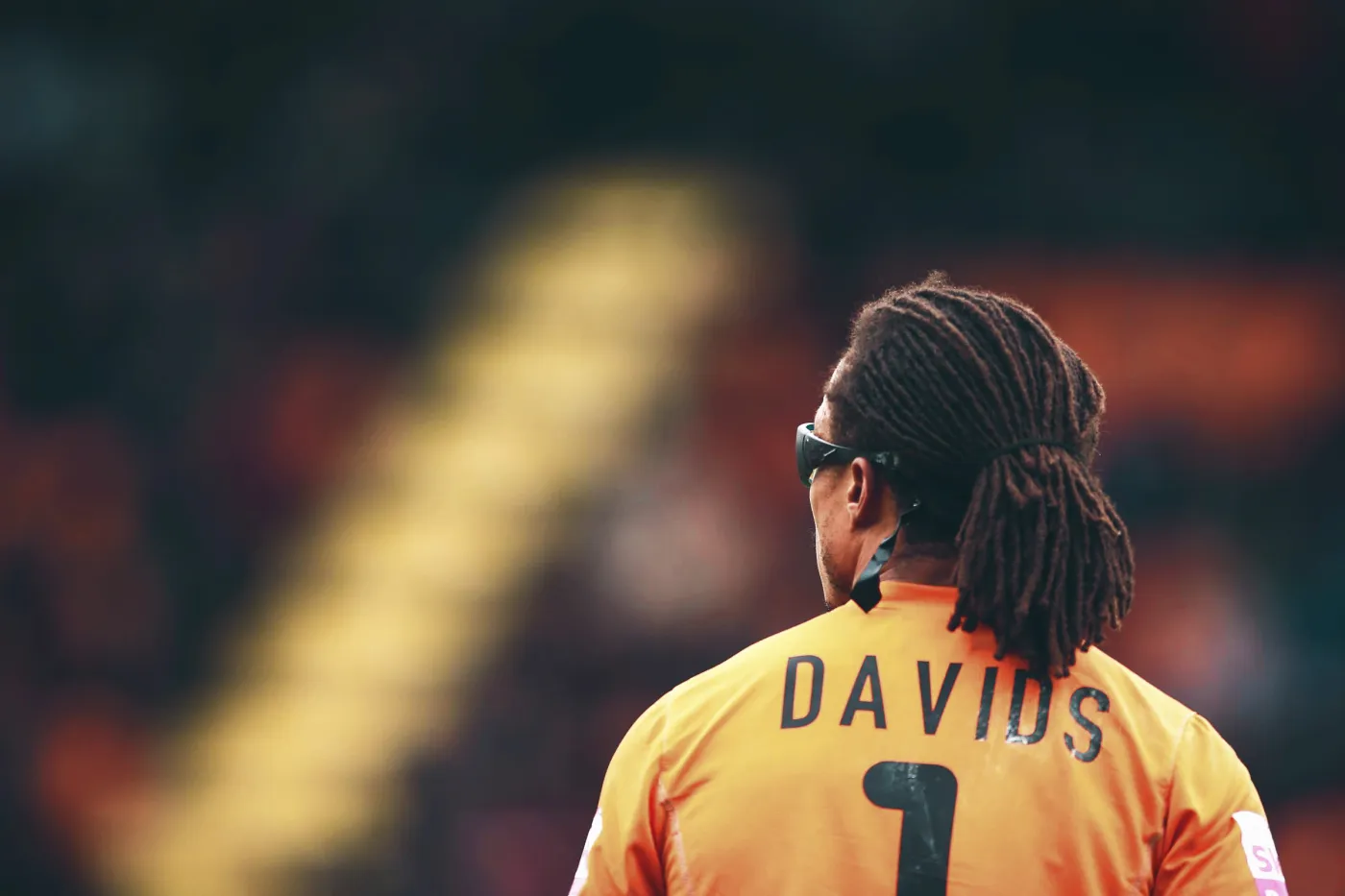
He influenced a generation of midfielders who came after him, and his combination of defensive ferocity and technical quality established a template that clubs across Europe still seek to replicate. Roy Keane had his fire. Patrick Vieira had his presence. Claude Makélélé had his positional mastery. Davids had all three — and the dreadlocks, and the goggles, and the aura that made every game he played feel slightly more important than it would have been without him.
At his peak — in Turin, in Amsterdam, in the orange of the Netherlands — Edgar Davids was one of the finest midfielders on the planet. That is not a debatable point. It is simply the truth, confirmed by the trophies, the performances, the respect of coaches and opponents who knew exactly what they were dealing with when the Pitbull walked onto the pitch.
Football rarely produces players like Edgar Davids. When it does, the game is the better for it.

Source: 3nul.com
Images: GETTY, Juventus, Pressure