
The legend of Kaká

Legends
🏆 Ricardo Izecson dos Santos Leite: KAKA
There is a version of football history in which Ricardo Izecson dos Santos Leite barely plays a professional game at all. In 2000, at eighteen years old and already in São Paulo's first-team squad, Kaká dived into a swimming pool and fractured a vertebra in his neck. The doctors told his family he was fortunate not to be paralysed. He made a complete recovery and went on to become one of the finest players his sport has ever produced — but the nearness of the alternative is part of what makes his story worth telling properly.
He grew up in São Paulo, having moved there from Gama in the Federal District when he was seven, and joined São Paulo FC's youth academy at eight. There is nothing unusual in that trajectory for a Brazilian boy with obvious ability. What was unusual was the combination — the speed, the vision, the calm under pressure, the capacity to run at a full-back from deep and arrive in the penalty area at exactly the right moment — that made him, from very early, different in kind rather than just in degree from the players around him.
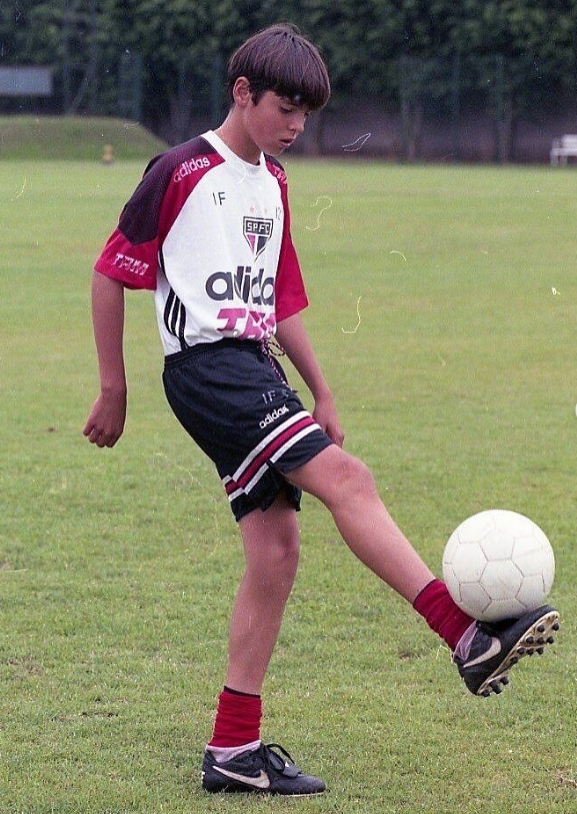
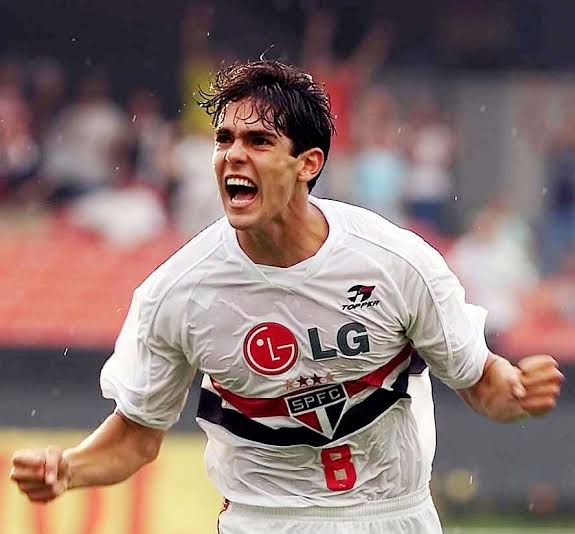
His debut for São Paulo's first team came in February 2001, aged eighteen. He scored twelve goals in his first season. By 2003, Europe was ready to welcome him.
Milan and the Making of a Legend
AC Milan paid €8.5 million for Kaká in the summer of 2003. By the standards of the time it was a reasonable fee for an unproven twenty-one-year-old from South America. By the standards of what followed, it was one of the great bargains in football history. In his first season he won Serie A. In 2005 he reached the Champions League final, only to be on the losing side as Liverpool completed one of the most dramatic comebacks the competition has ever seen — 3–0 down at half-time, back to 3–3 after sixty-five minutes, and through on penalties in Istanbul.
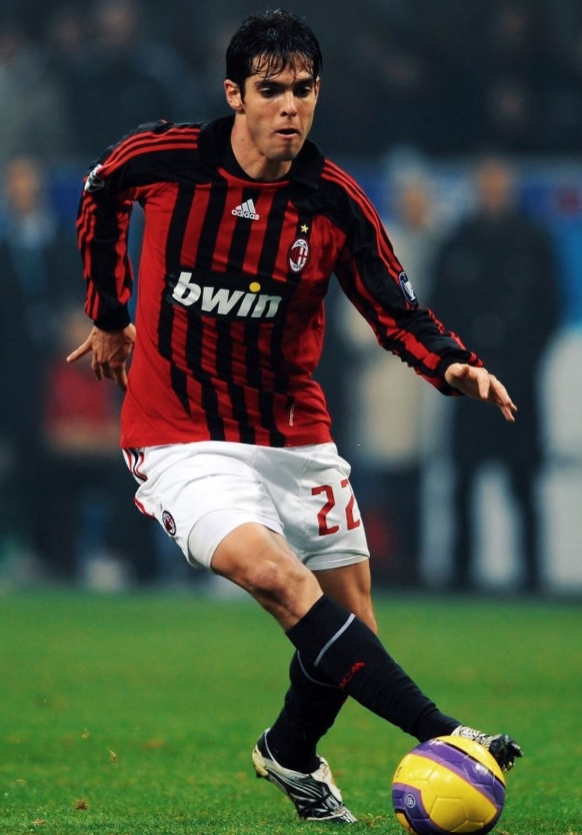
Milan, and Kaká, had to wait two years for the rematch. In the 2006–07 Champions League, he was not merely good — he was transcendent. He finished as the tournament's top scorer with ten goals, leading Milan through a campaign that brought the European Cup back to San Siro with a 2–1 win over the same Liverpool in Athens. His performances across that season — not just in Europe, but in Serie A too — produced what most who watched him describe as the finest sustained individual display from a midfielder in the modern era of the game.
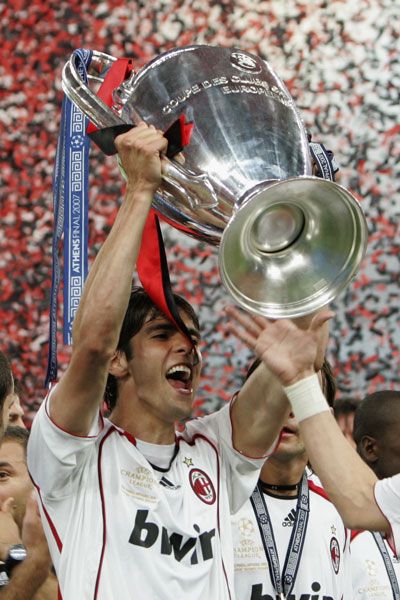
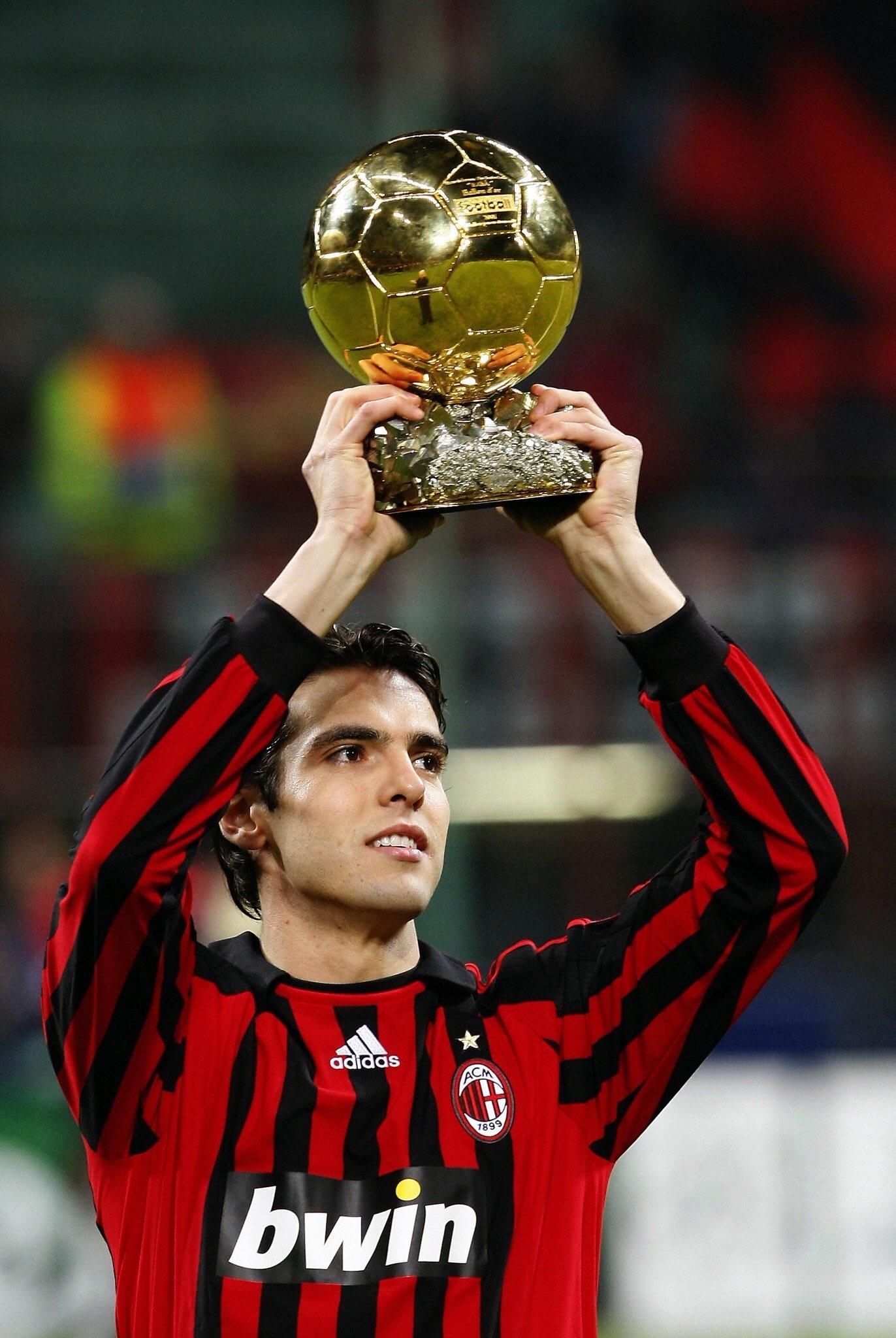
At the end of that season, Kaká won the Ballon d'Or, the FIFA World Player of the Year award, and the UEFA Club Footballer of the Year — a clean sweep of the sport's highest individual honours. The Ballon d'Or victory was notable for its margin: he was the last player to win it before Cristiano Ronaldo and Messi began a fifteen-year conversation about which of the two was the finest footballer alive. When people now describe the era that preceded that duopoly, they invariably begin with Kaká's 2007 as the dividing line.
The Madrid Years
In the summer of 2009, Real Madrid signed Kaká for €67 million — then the second-highest transfer fee in football history, on the same extraordinary weekend that they also completed the €94 million purchase of Cristiano Ronaldo from Manchester United. In terms of profile and expectation, the Kaká signing made sense on every level: here was the reigning Ballon d'Or winner, a player who had been the best in the world just two years earlier, joining a club that wanted to be the home of the sport's finest.
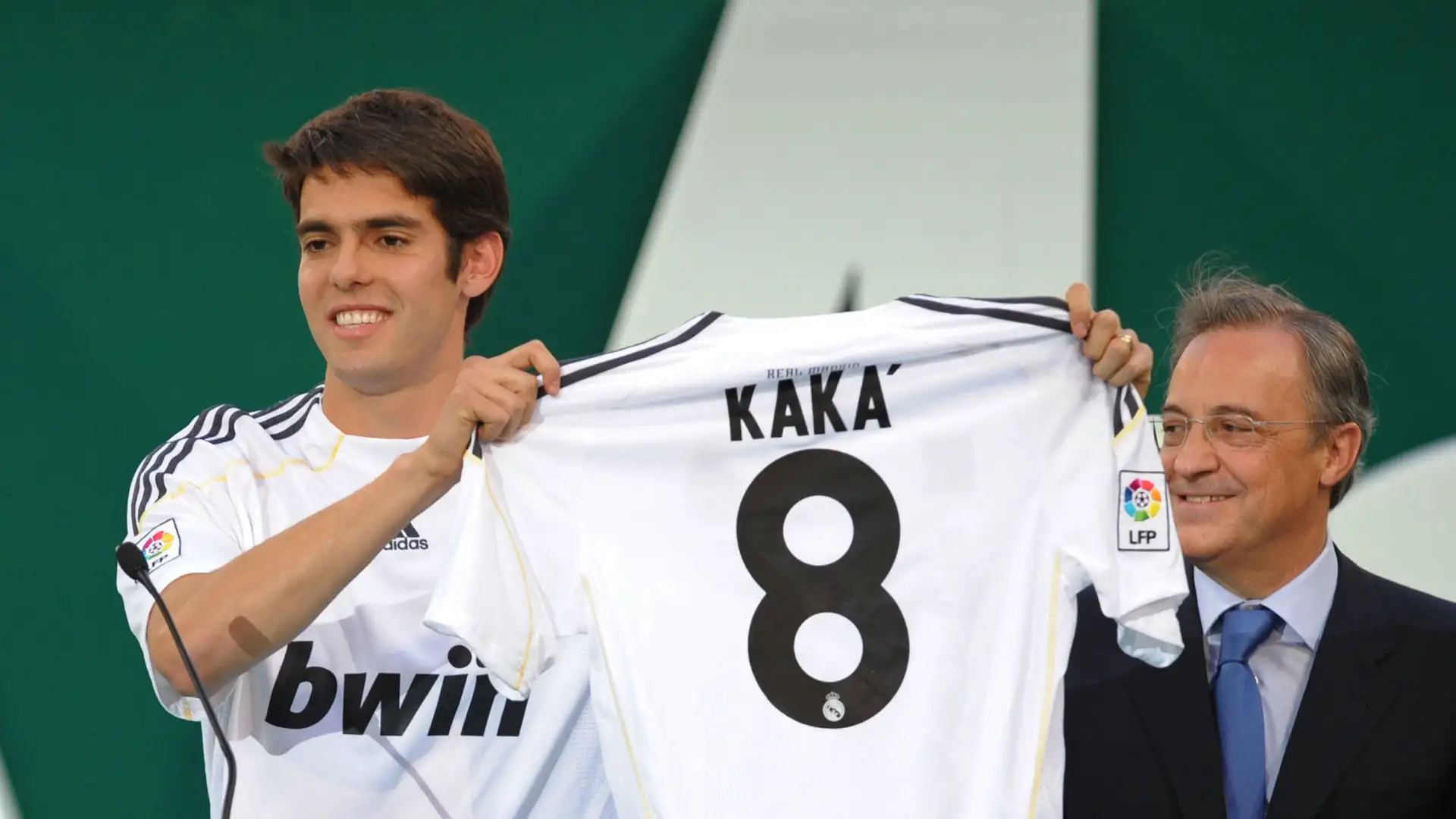
What followed was a series of injuries — to his knee, his groin, and his iliotibial band.
Kaká was robbed of the pace that had been central to everything he did. He was still, at his best, a player of exceptional intelligence and technique. But the explosive quality that had allowed him to ghost past defenders at the top of his acceleration was gone, or compromised, for long stretches of those four years at the Bernabéu. He won La Liga in 2012 and the Copa del Rey in 2011, but his individual contribution was a fraction of what he and Madrid had hoped for.
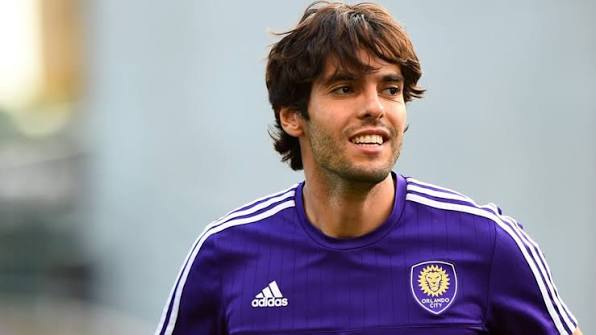
He returned to Milan in 2013 and left the following year, eventually finding a final home in American football — Orlando City SC, for whom he became the first Designated Player in the club's history and the focal point of an expansion franchise that needed a name to build around. He scored on his MLS debut in March 2015, and gave the American game three seasons before announcing his retirement in December 2017 at thirty-five.
Brazil and the World Cups
Kaká made his debut for the Seleção in January 2002, and went on to earn 92 caps and score 29 goals across fourteen years of international football. His World Cup story, though, is defined as much by what did not happen as by what did. In 2002 he won the tournament in Japan and South Korea — Brazil's fifth world title, Ronaldo's crowning achievement — but Kaká himself played only 25 minutes, all in the group stage. He held a winner's medal without the memories to match it.
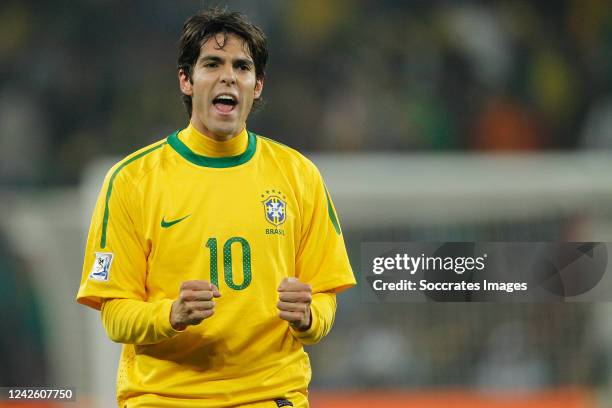
By 2006 in Germany he was a very different player: the best midfielder in European football, the beating heart of a Brazil side that many considered strong enough to win. They did not. A quarter-final exit against France, in which Zidane's languid authority exposed Brazil's fragility in tight games, ended a campaign that had promised more than it delivered. Kaká scored against Croatia in the group stage, but Germany 2006 remained the World Cup that slipped away.
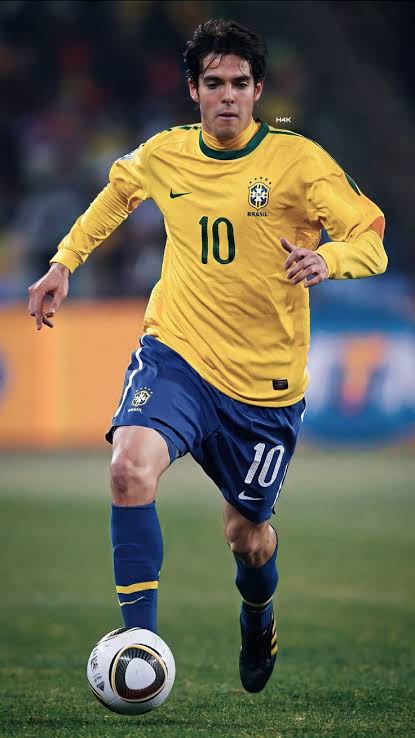
The 2010 World Cup in South Africa brought a red card against Ivory Coast and another quarter-final elimination, this time against the Netherlands. He continued representing Brazil until 2016, finishing with 92 caps — a career that, for all its achievements, carried a particular weight in the international context: a player of his quality who never quite got the platform that his abilities deserved on football's biggest stage.
The Leagcy
What Kaká leaves behind is not just a trophy cabinet or a statistics page, though both are impressive. He leaves a particular memory — of a midfielder in full flow at the peak of his powers, running at defenders with the ball seemingly attached to his boots, arriving in the penalty area with the composure of someone who had been there a thousand times before.
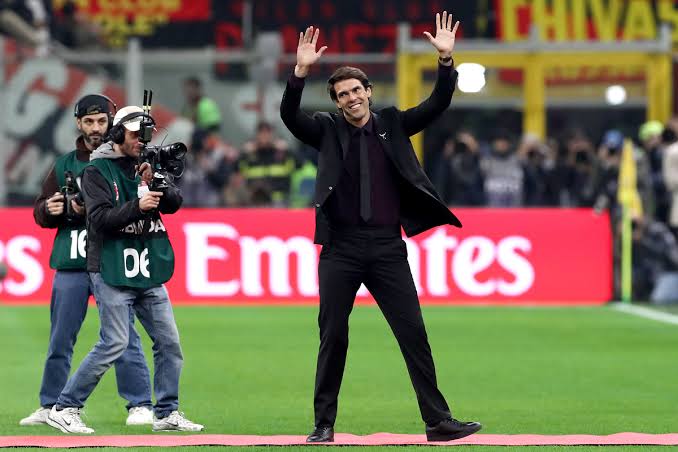
He was, for one luminous stretch, the best football player in the world — and the way he played made it look like the most natural thing imaginable.
Source: 3nul.com
Images: GETTY, AC Milan