
O Fenômeno

Legends
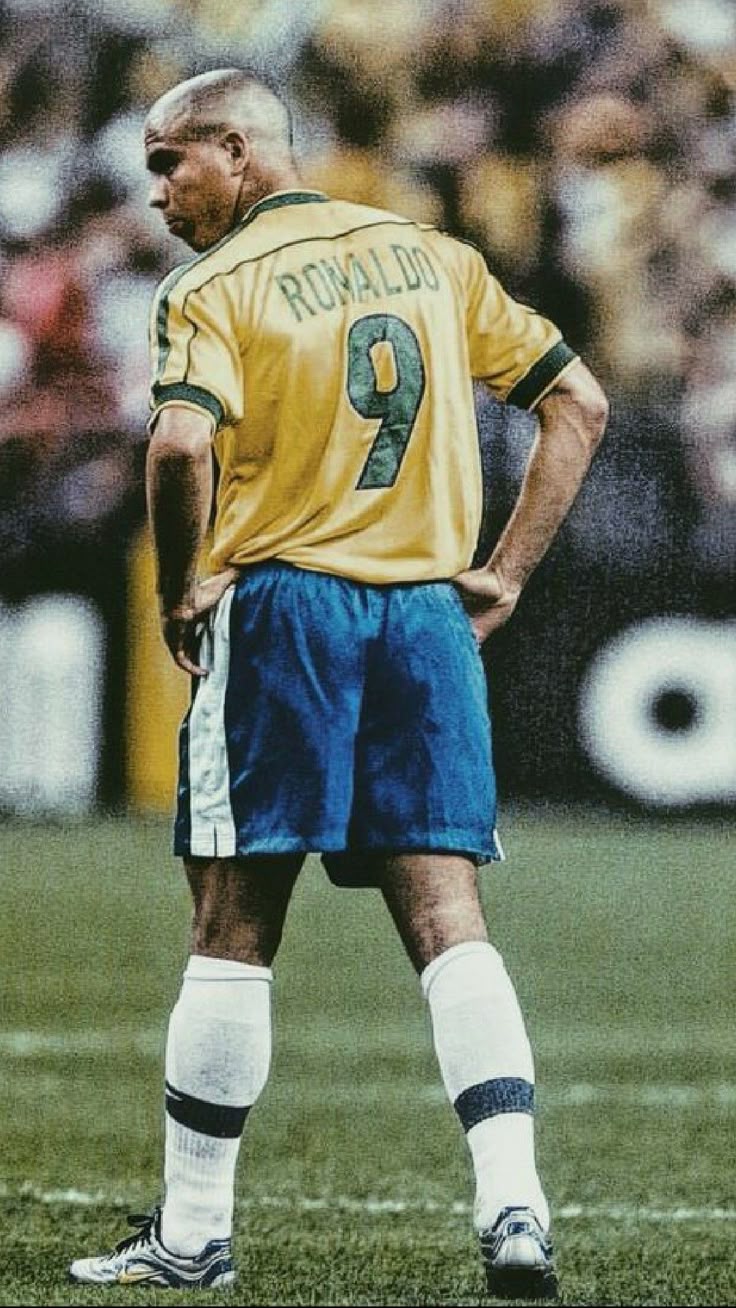
🏆 O Fenômeno. The one and only Ronaldo Nazário!
There are footballers, there are great footballers, there are also legendary footballers and then there is Ronaldo Luís Nazário de Lima. We repeat: Ronaldo Luís Nazário de Lima.
Simply known to the world as "O Fenômeno" — The Phenomenon — the Brazilian striker occupies a category entirely his own in the history of the sport. Not the greatest goalscorer of all time by numbers alone, not the most decorated by silverware, but by the sheer quality, the timing and the manner of what he produced, widely regarded as the most naturally gifted pure striker the game has ever seen.
To understand why, you have to go back to the beginning.
Born to Score
Ronaldo was born on 22 September 1976 in Bento Ribeiro, a working-class suburb of Rio de Janeiro. Football was everywhere and everything, as it so often is in Brazil — and from the moment Ronaldo first touched a ball, it was clear that something different was at work. He joined Cruzeiro as a teenager and exploded onto the scene with 58 goals in 60 matches, a ratio so extraordinary that the entire football world sat up and took notice.
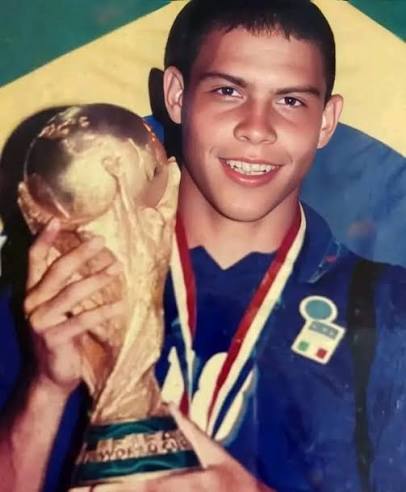
In 1994, aged just 17, he was part of Brazil's World Cup-winning squad in the United States — unused, but present, absorbing everything around a golden generation of Brazilian football. He was not yet ready for that stage. He would be. And when he arrived on it, the sport would never look quite the same again.
PSV, Barcelona and the Emergence of Something Extraordinary
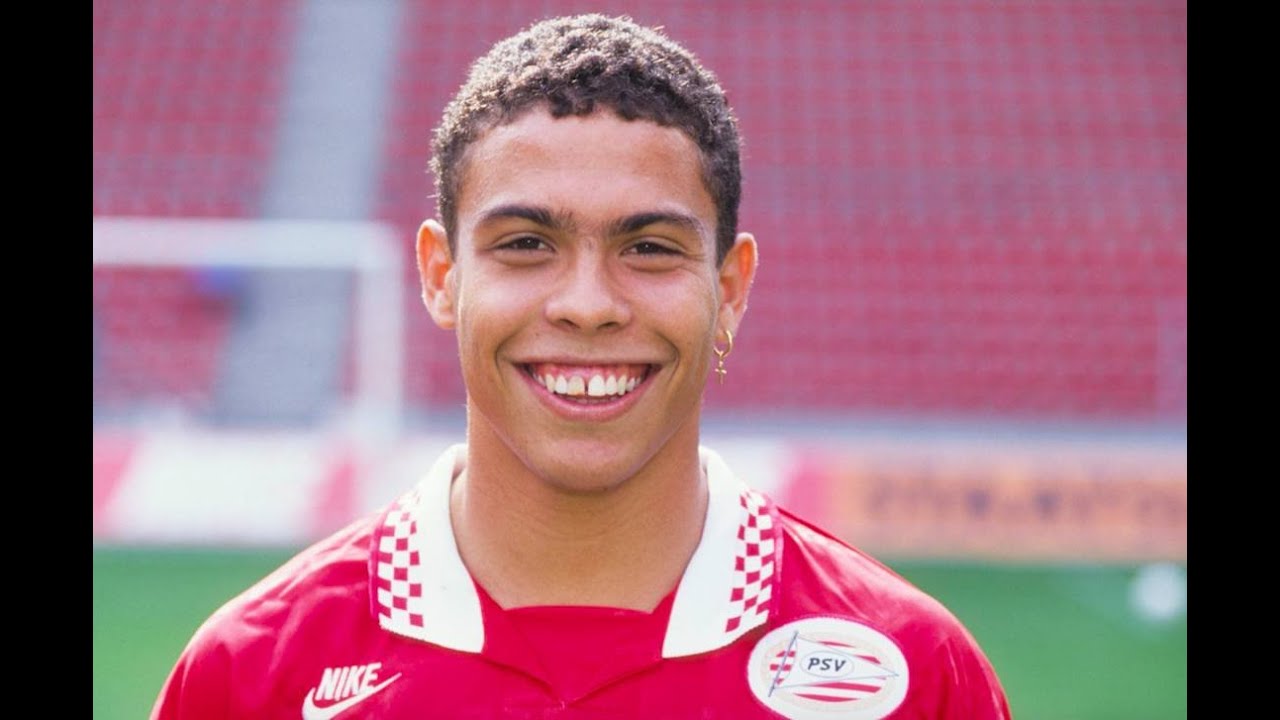
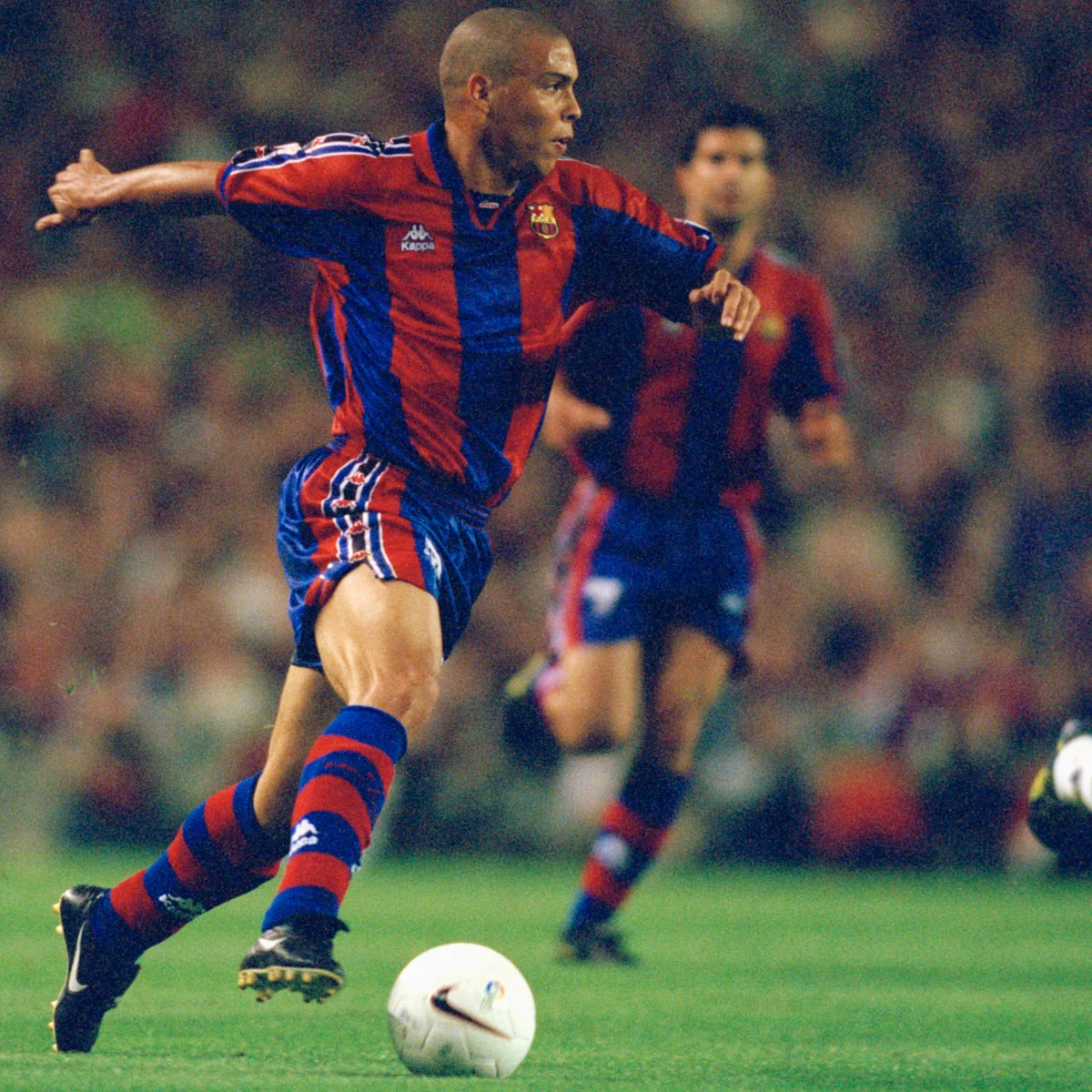
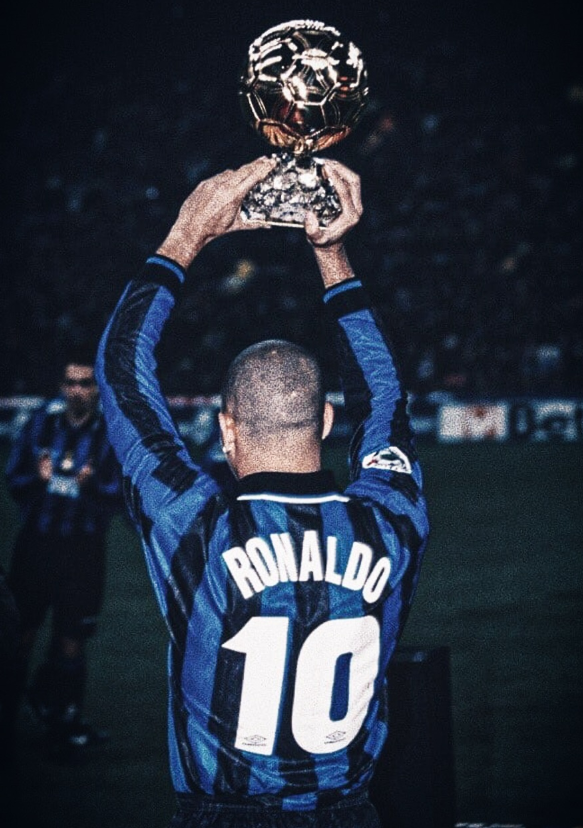
After a brief but devastating spell at PSV Eindhoven — 54 goals in 58 appearances — Ronaldo arrived at Barcelona in 1996 for a world-record fee. What followed was a season of almost incomprehensible individual brilliance. He scored 47 goals in 49 appearances across all competitions, won the Copa del Rey, the UEFA Cup and the Spanish Super Cup, and was awarded the Ballon d'Or and FIFA World Player of the Year at the age of just 20.
But Barcelona, for all his brilliance there, was merely a prelude. The stage that would define him was waiting in Milan.
Inter Milan: Where the Legend Was Made
Ronaldo moved to Internazionale in 1997 for another world-record fee — and the combination of his talents with the grandeur of the San Siro produced some of the most breathtaking individual football ever witnessed in Serie A. He won a second FIFA World Player of the Year award in 1997 and a third in 2002, and his performances for Inter in his three seasons before injury struck were the stuff of fantasy.
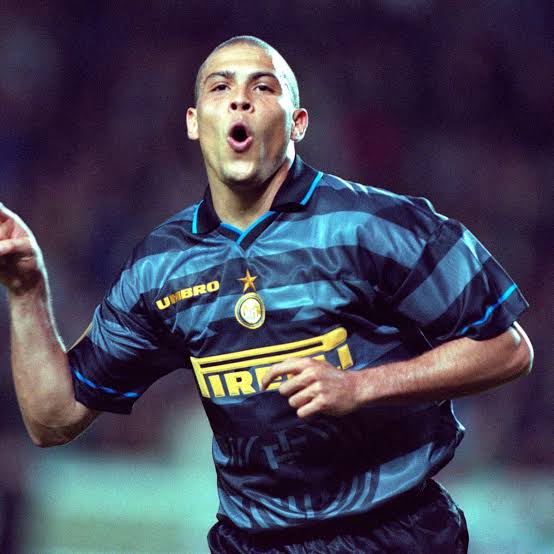
The statistics tell part of the story. The highlights tell more. But the accounts of those who watched him play in this period — the instantaneous acceleration from standing, the power, the balance, the audacity of his finishing — suggest that no footage quite captures what it felt like to be in the stadium when Ronaldo had the ball at his feet.
The Injuries: Football's Cruelest Chapter
And then came the darkness. A series of devastating knee injuries — the first striking in 1999, the second in 2000 — robbed the world of Ronaldo at the height of his powers and threatened to end a career that had barely reached its midpoint. At various stages, the prognosis was terminal. Doctors feared he would never play again at the highest level.
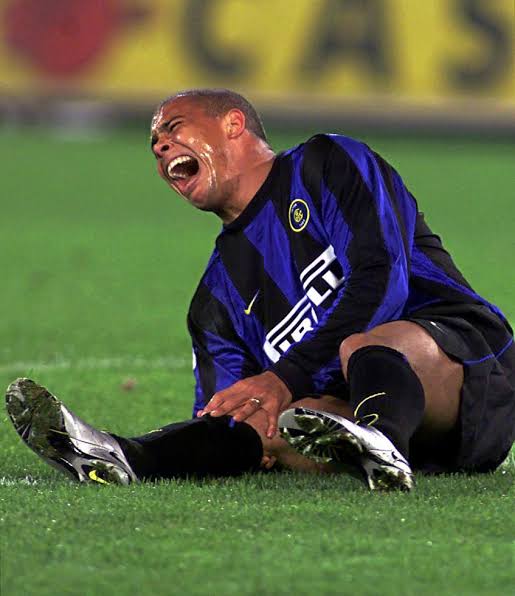
That he came back at all was remarkable. That he came back to win the World Cup was the stuff of legend.
Japan and Korea 2002: REDEMPTION
The 2002 FIFA World Cup in Japan and South Korea is Ronaldo's masterpiece. Arriving with a cloud over his fitness, carrying the scars of years of injury and the memory of that mysterious convulsive episode on the eve of the 1998 World Cup final in Paris — when he was inexplicably included in the starting lineup despite collapsing hours before — Ronaldo was not expected to dominate the tournament.
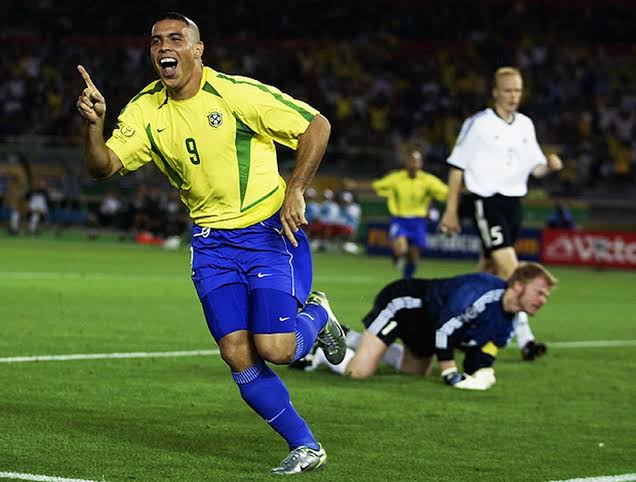
He dominated the tournament. Eight goals in seven games. Both goals in the final against Germany. The iconic haircut that became the most replicated style in playgrounds around the world. And that smile — wide, jubilant, unstoppable — as he held the trophy aloft in Yokohama.
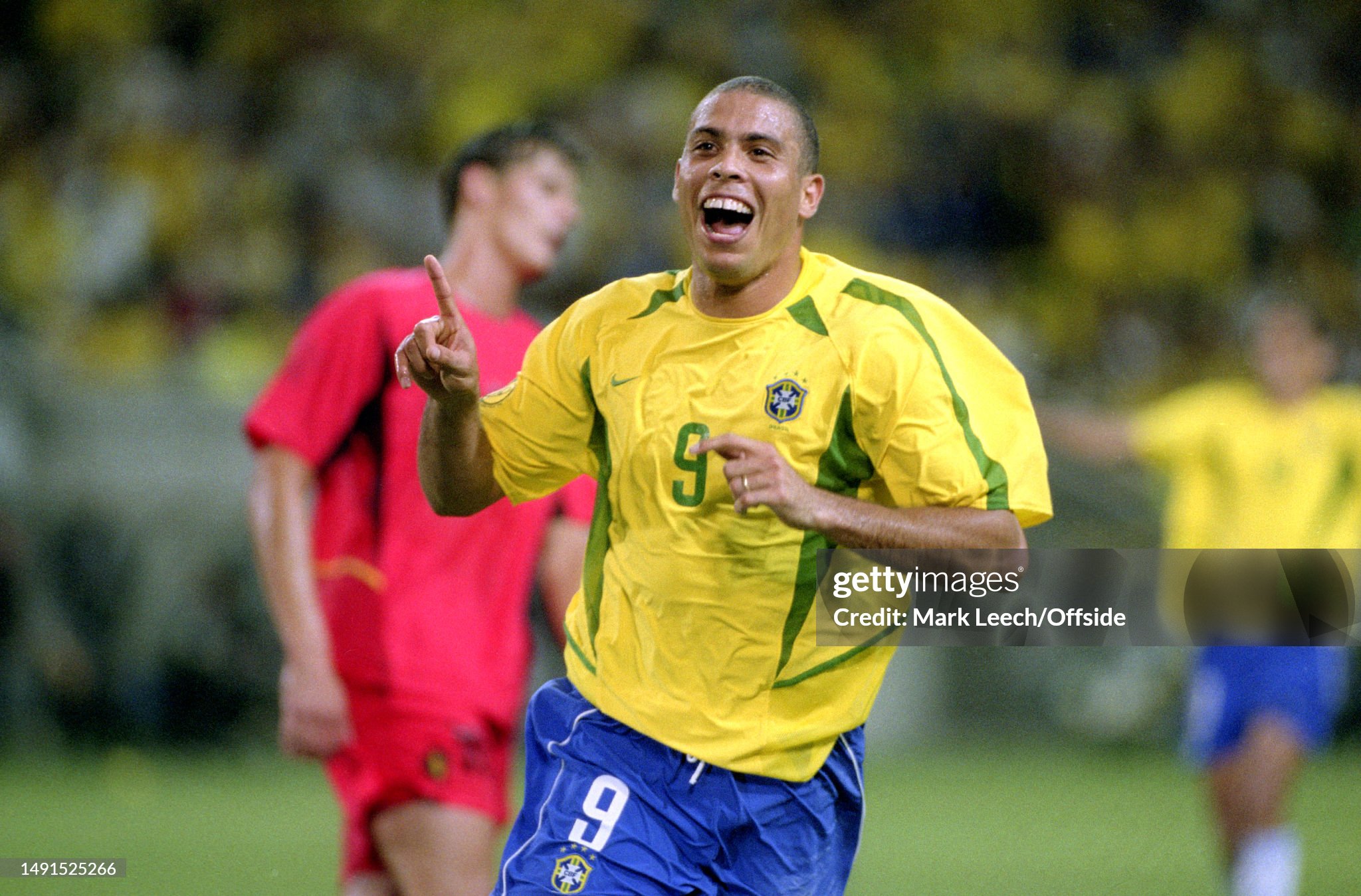
It was the redemption arc that football had never seen before and has not seen since. A player who had been written off, who had suffered more than any superstar athlete should suffer, returning to claim the game's ultimate prize in the most emphatic manner possible. Ronaldo finished the tournament as its top scorer and its defining figure. Brazil won their fifth World Cup. And the world remembered what it had almost lost.
Real Madrid and the Final Chapter
His move to Real Madrid in 2002 for yet another world-record fee — as part of the Galácticos project alongside Figo, Zidane and Beckham — brought him to the club that would provide the final significant chapter of his career. He won La Liga in 2003, added more goals to a career total that would eventually reach 352 in 518 professional appearances, and delivered moments of individual magic that had the Bernabéu faithful on their feet even as his body — ravaged by years of injury and the cumulative toll of being the most physically explosive player on the planet — began to resist him.
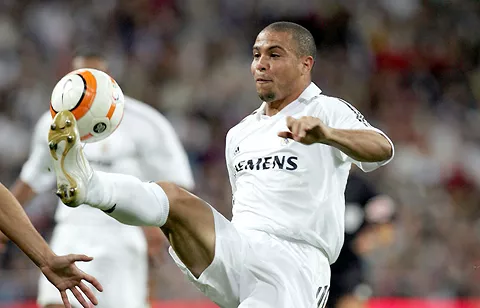
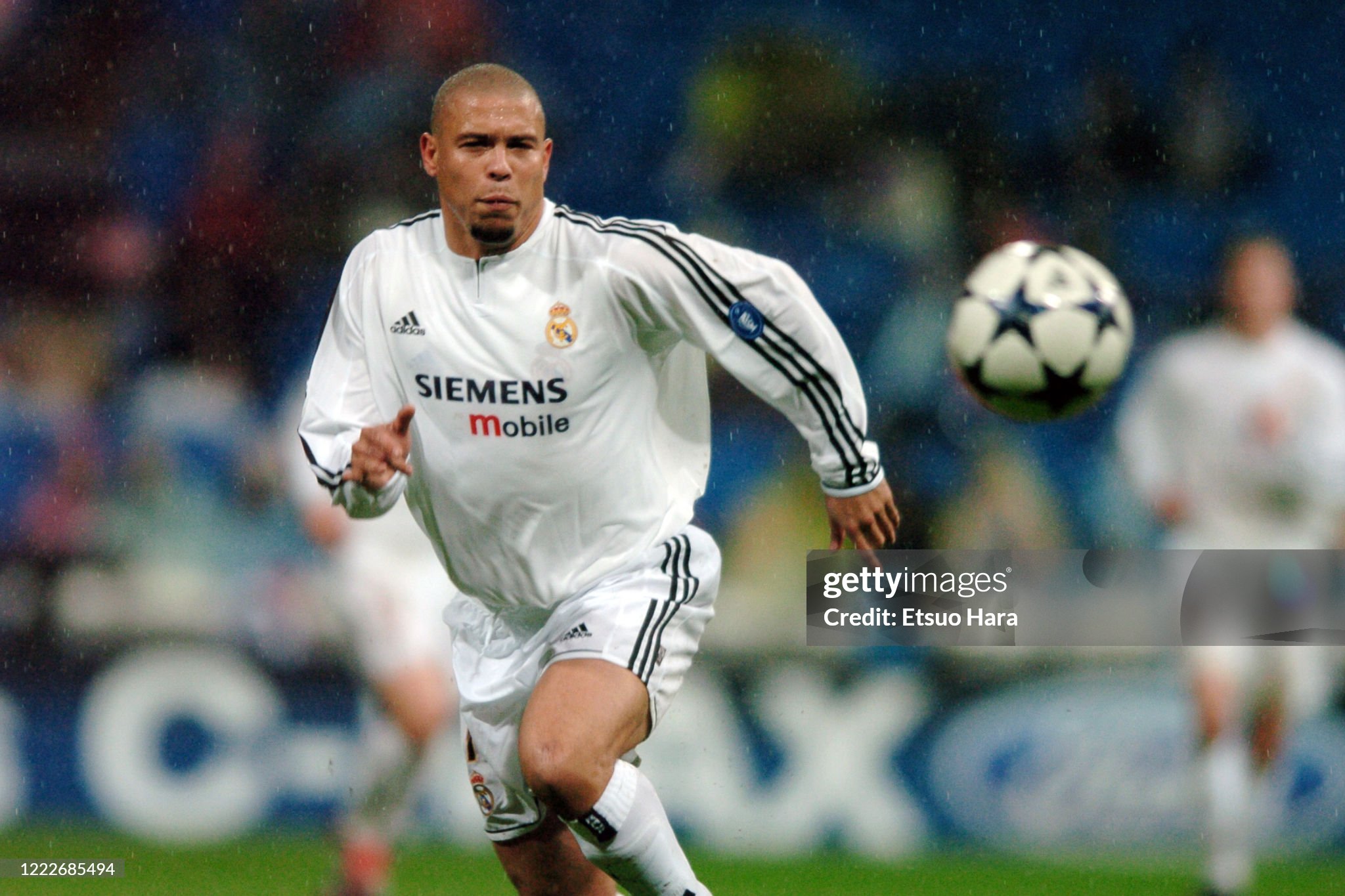
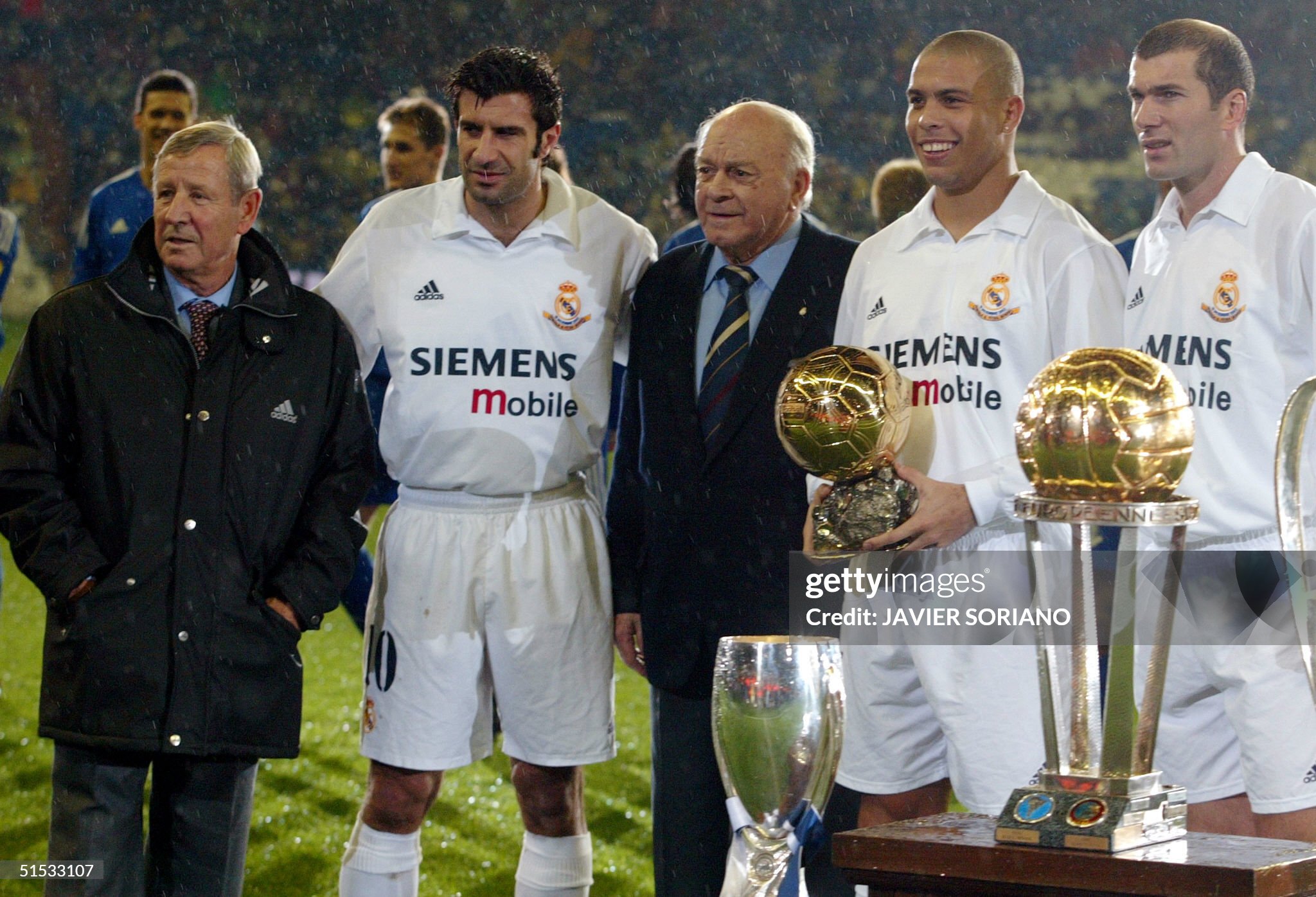
By the time he left for a final spell at AC Milan and then Corinthians, the end was clear. He retired in 2011, at 34, his knees having given everything they had to give.
The Legacy
What does Ronaldo Nazário leave behind? Two World Cups. Three FIFA World Player of the Year awards. Two Ballon d'Or trophies. Goals of breathtaking quality across four of the world's greatest clubs. And a place in the memory of every football supporter who watched him play that no statistic can adequately capture.
He was not the fastest player on the planet — though at his peak between 1996 and 1998, he was close. He was not a technical magician in the way that Ronaldinho was. He was something rarer and more fundamental: a striker of absolute totality. Left foot, right foot, head. One on one with the goalkeeper, he was infallible. In the air, in tight spaces, running at pace, from distance — every dimension of goalscoring was available to him, and he deployed each one with the casual certainty of a man who had been placed on earth for no other purpose.
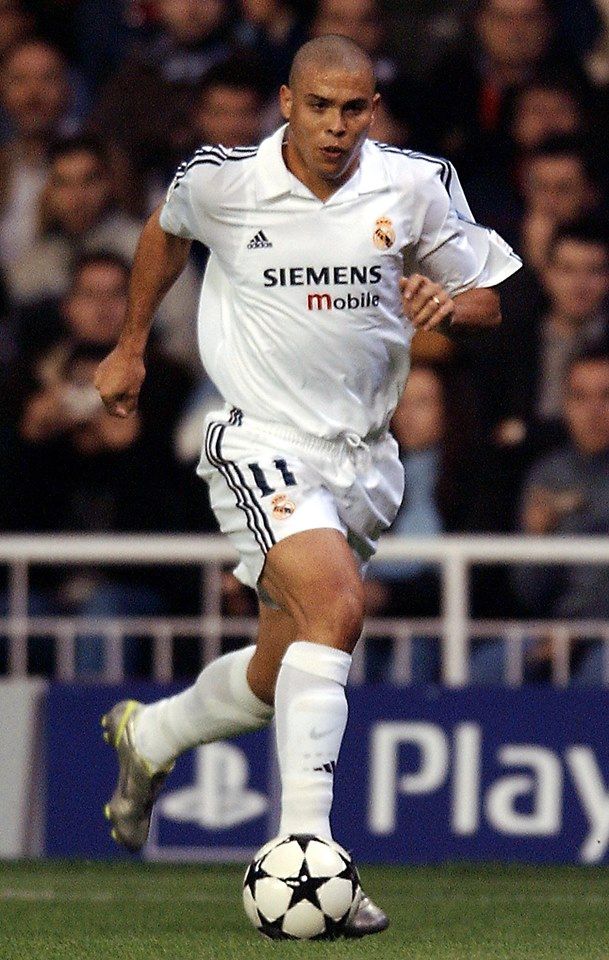
Strikers who came after him — Thierry Henry, Fernando Torres, Zlatan Ibrahimović, Robert Lewandowski, Erling Haaland — all owe something to the blueprint he laid down. The complete centre-forward. The player who could win a game by himself. The player who made the impossible look inevitable.
There was Pelé. There was Maradona. And then, arriving with the force of something entirely new, there was Ronaldo.
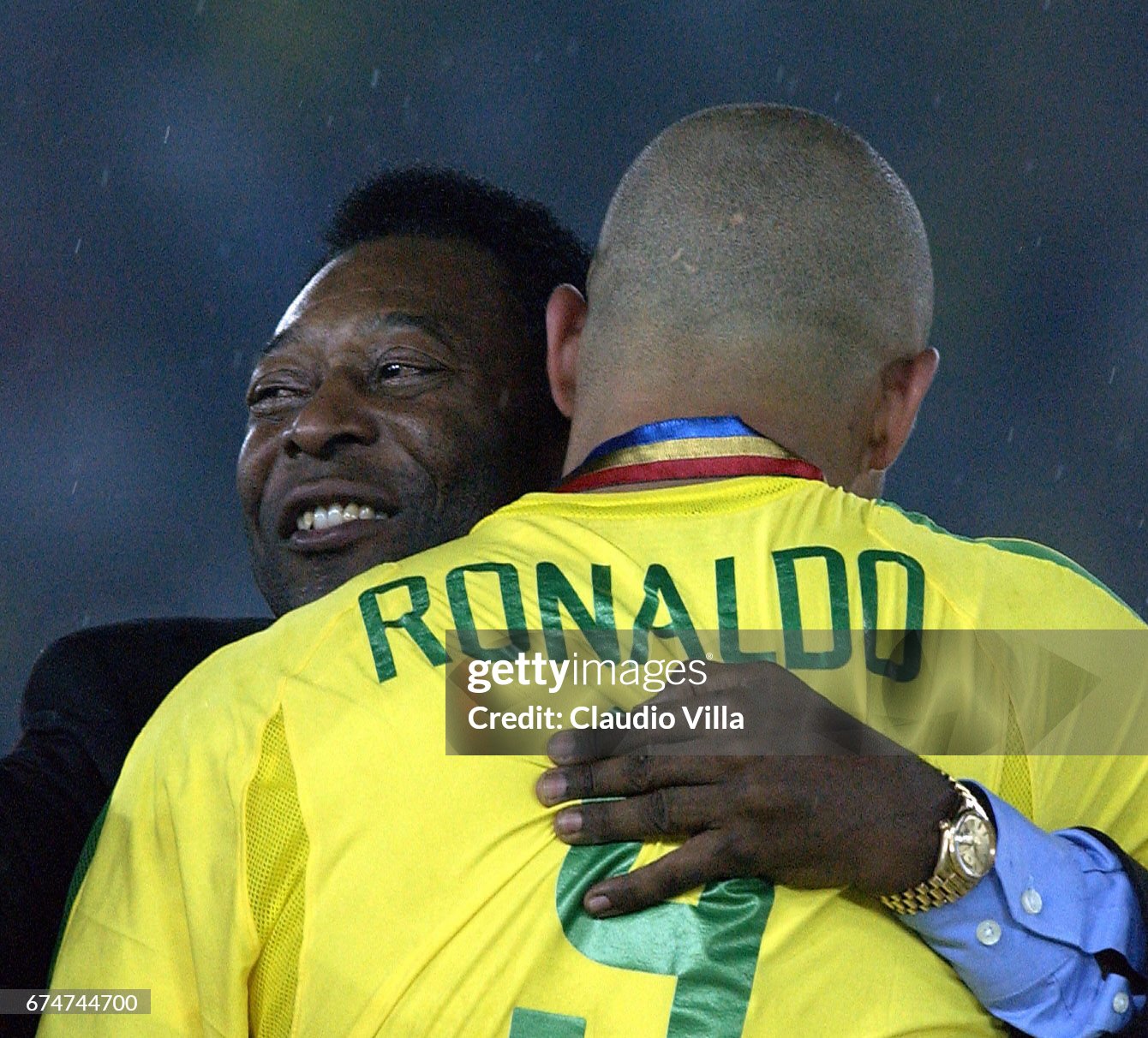
Real recognizes Real...

Source: 3nul.com
Images: GETTY, Inter Milan, Real Madrid